Word Search Tips: How To Solve Word Searches Faster (7 Techniques That Actually Work)
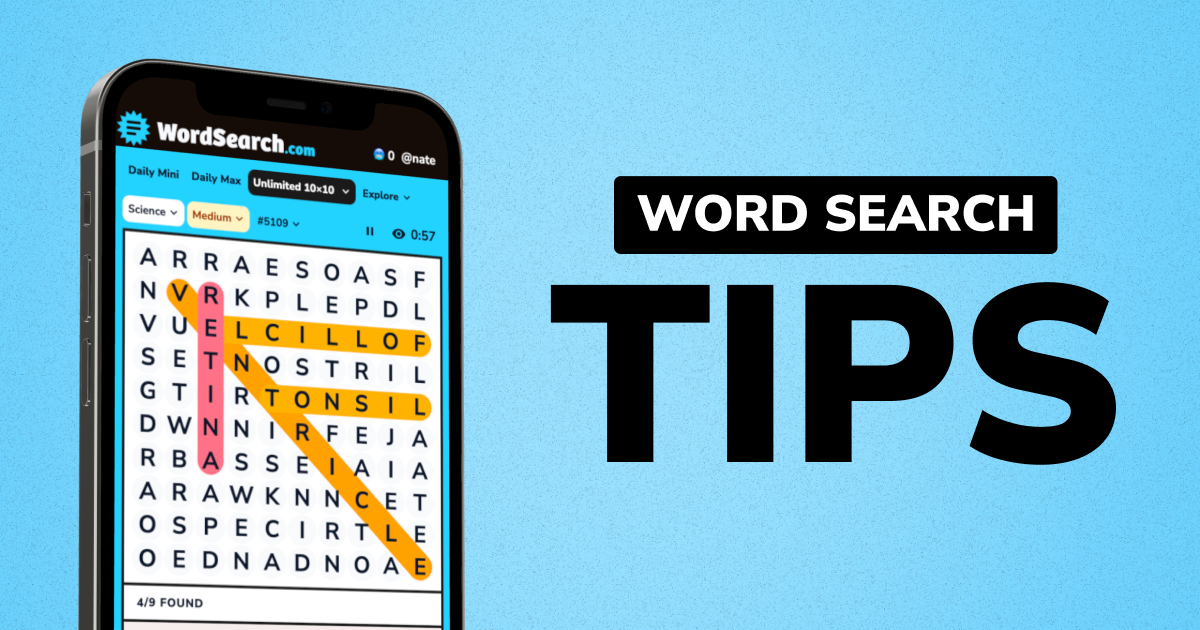
Twelve words found in three minutes, then one word holds out for 10. Everyone knows the feeling. Fast solvers aren't seeing a harder puzzle — they're searching differently. A systematic method beats squinting and letting God take the wheel every time.
This guide takes you from the basics up to the techniques tournament solvers and speedrunners actually use, so the next stubborn word doesn't cost you 10 minutes. Want to warm up first? Start with today's daily puzzle!
Start With the Basics: Two Tips Every Solver Should Know
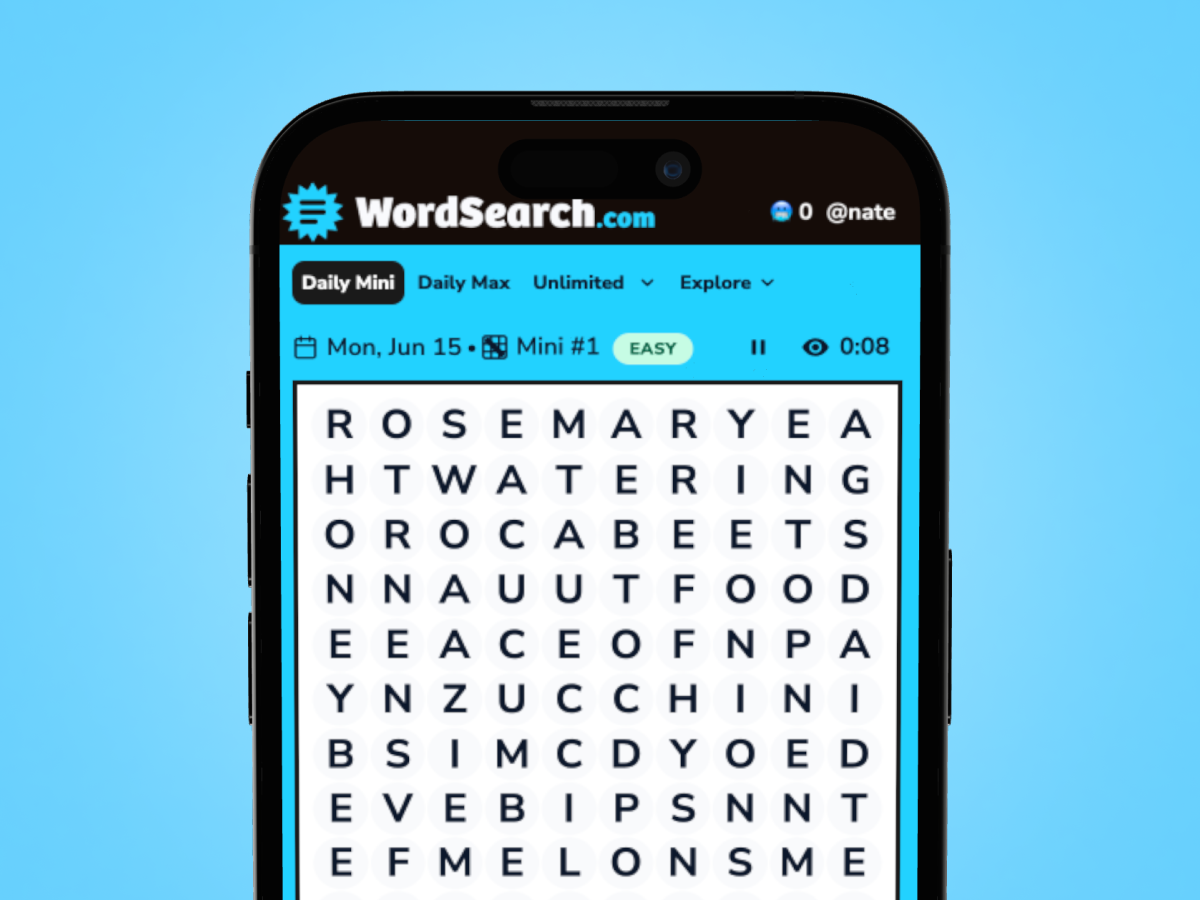
Before the advanced stuff, two foundations carry most of your early speed:
⭐ First, scan for rare letters. Q, X, Z and J show up in only a handful of words, so when your list includes one, your eyes have far less grid to cover. Spot the Q and you've often found the word.
⭐ Second, hunt first letters. Pick a word, fix its opening letter in mind and sweep for just that letter before checking anything else around it.
You may already know these. That's fine — they're the floor, not the ceiling. What follows is what comes next. Brand new to the format? Here's how to play.
The 7 Advanced Techniques
1. Suffix Anchoring — Hunt the Ending, Not the Beginning
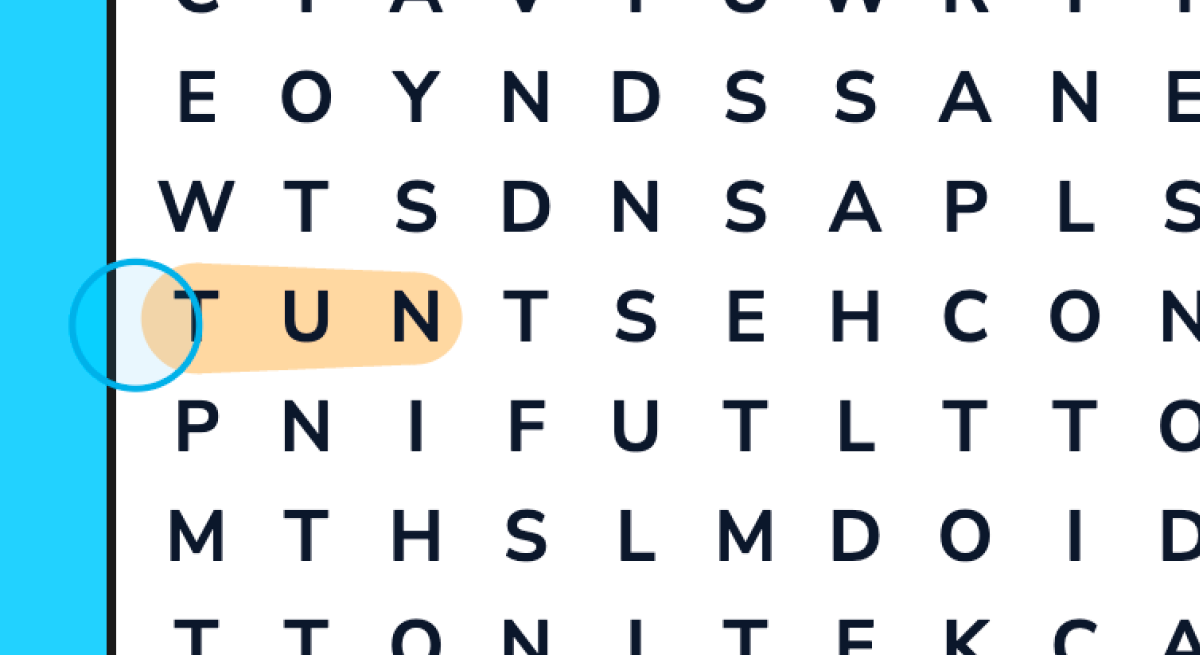
Most solvers chase first letters, which means the front of every word is crowded territory. Flip it. Endings like -ING, -TION, -ED and -ER are rarer letter combinations, and almost nobody scans for them, so the competition for your attention is lower at the back of the word.
Say your themed list is autumn words: HARVEST, PUMPKIN, SCARECROW, GATHERING. Instead of hunting four different first letters, scan the grid for -ING once and GATHERING surfaces. The ending does the work.
2. Systematic Row Sweeps — Stop Wandering the Grid
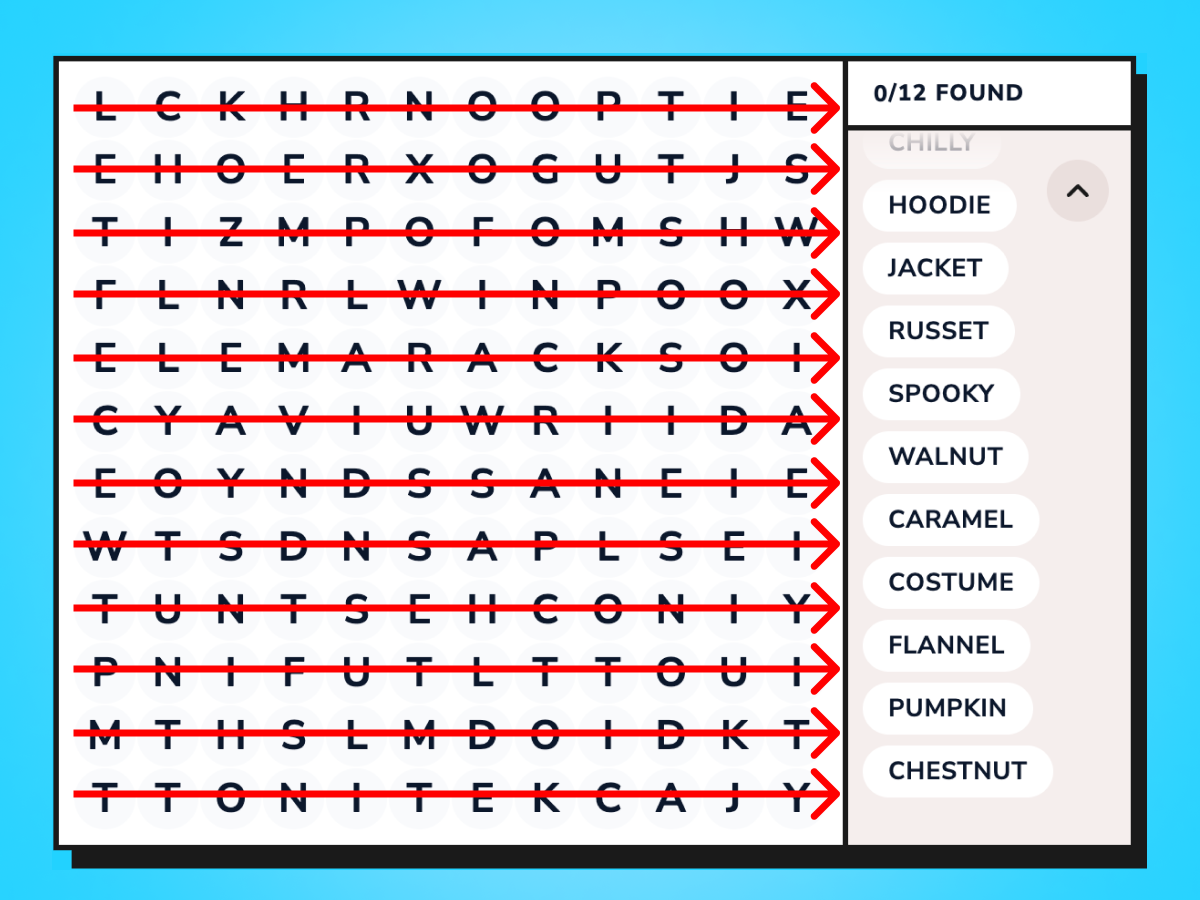
The letter grid is not a Where's Waldo page, but most people treat it like one — eyes darting, circling back over regions they already checked. For casual players wanting to play at their own pace and relax, that's fine. But for perfectionists who want to clear the puzzle in the most efficient way, that wastes time and misses words.
Read the grid like text. Left to right, top to bottom, one row at a time. Finish the horizontal pass, then do a single vertical pass down each column. You cover every cell exactly once instead of revisiting the same corner five times.
3. Pattern Chunking — Read Letter Pairs, Not Letters
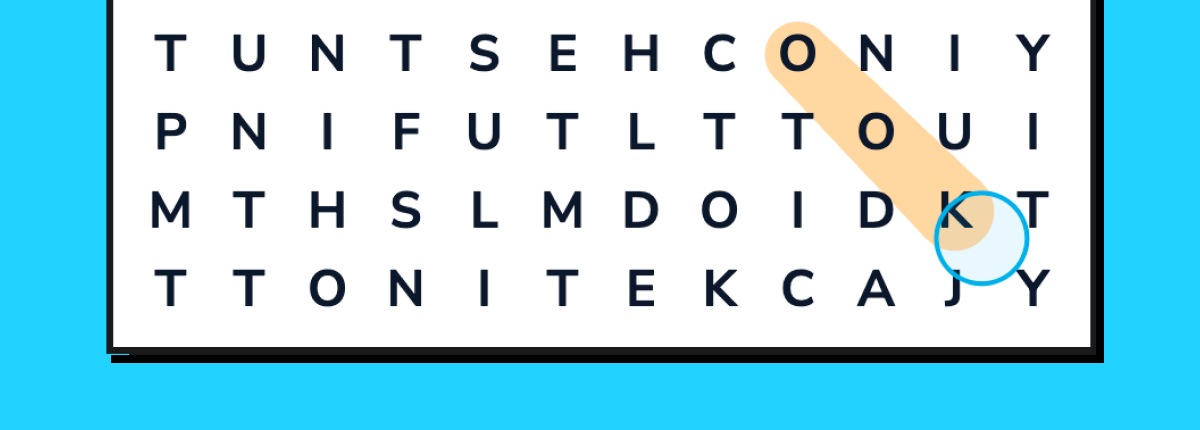
Looking for PUMPKIN? Don't hunt P, then U, then M. Scan for "MP" or "KI" as a single unit. Your brain matches letter pairs — bigrams — faster than it confirms one letter at a time. This is the closest thing to a cheat code that isn't actually cheating.
Pick the most distinctive pair in the word. "PK" in PUMPKIN is rare enough that spotting it almost guarantees you've found the word.
4. Master the Diagonals and Reverse Words
Diagonals and reversed words are where unfound words hide. Solvers have a real blind spot for right-to-left and bottom-up placement (unless you're familiar with reading East Asian literature) — your eyes are trained to read forward, so backward words stay invisible.
The fix: when you're stuck on the last word or two, stop scanning normally and deliberately re-scan only for the word spelled backward. Then check the diagonals, both directions. The missing word is almost always sitting in one of those overlooked orientations.
5. Work the Word List Strategically
The word list is a menu, not a sequence. Most people work straight down it, top to bottom. That's fine for casuals, but if you're aiming to be an expert? Don't.
Hunt long words first — they have more anchor letters and fewer possible positions in the grid, so they're easier to lock down. Next, target words with doubled letters: OO, EE and LL pop out of a grid of single letters. Save short common words for last, since they're the hardest to spot and the easiest to confuse with random grid fill.
6. Use Overlapping Words To Your Advantage
Found a word? Its letters are prime real estate. Puzzle generators love to overlap words to fit them all in, so the letters you just circled often double as part of another answer.
Before you move on, check the letters of each found word for intersections. A shared T or A can hand you the next word for free.
7. Soften Your Gaze — Peripheral Scanning
This one sounds a little strange, but it works. Sustained, heavy inspection is great when you've already got a bite of what you're looking for, but it can quickly tire you out. Defocus your eyes slightly, the way you would for a Magic Eye image, and let the whole grid blur a touch. Anomalies — a lone Q, a doubled letter, an unusual cluster — tend to pop out of a soft-focus field better than a hard one.
It won't find every word, and it's not magic. But when you're stuck, unfocusing for a few seconds is a useful reset.
Putting It Together: A Practice Routine That Builds Speed
Speed comes from practice, not willpower. Here's a routine that builds it:
Start with the Daily Mini as a warm-up — small grid, quick win, gets your eyes moving. Then move to the Daily Max, where the difficulty ramps and the bigger grids actually reward your technique. This is where suffix anchoring earns its keep: on a dense grid, scanning endings instead of beginnings is the difference between a fast solve and a stall.
Once you want volume, Unlimited lets you run grids at escalating sizes for as long as you like. The timer and the streak are the point — they turn a one-off search into a daily habit, and the habit is what makes you fast. For an extra challenge, try the harder difficulties or have a friend make a challenging word search puzzle once the techniques feel automatic.
Frequently Asked Questions
What's the fastest way to solve a word search?
Scan for rare and distinctive letter pairs rather than reading letter by letter. Lock onto a word's most unusual feature — a Q, a doubled letter, a suffix like -ING — and sweep the grid for that one target in systematic rows. Hunting whole patterns instead of single letters is the biggest speed gain available.
Why can't I find the last word in a word search?
It's almost always placed diagonally or spelled backward. Your eyes are trained to read left to right, so right-to-left and bottom-up words slip past. When one word is holding out, stop scanning normally and re-scan specifically for that word reversed and on the diagonals.
Are word searches good for your brain?
They give your visual scanning and pattern recognition a light workout, and many people find them relaxing. They're not a cure-all, especially for cognitive conditions, but as a low-pressure way to keep your eyes and focus sharp, they hold up fine.
How long should a word search take?
A small grid of 10 to 15 words takes a couple of minutes once you've got some technique; a large or hard grid can run 10 minutes or more. There's no official benchmark — the useful measure is your own time on a repeated puzzle size, which is exactly what a timer is for.
Do word search puzzles have words backwards?
Yes. Most word searches include reverse words — spelled right to left or bottom to top — along with diagonals, specifically because they're harder to spot. If you only scan forward, you'll consistently miss them.
How do I get better at word searches?
Practice on a consistent grid size, time yourself and layer in one technique at a time until each becomes automatic. Start with rare-letter scanning, add suffix anchoring and pattern chunking, then drill volume on Unlimited. Speed follows reps.
Play a Word Search Today!
Have fun learning and practicing your newly learned techniques! Today's puzzle is waiting and the timer's ready. Play now!
 Mini Crossword
 Midi Crossword
 Diffle
 Killer Sudoku
 Numberle