Are Word Searches Good for Your Brain? What the Research Actually Says
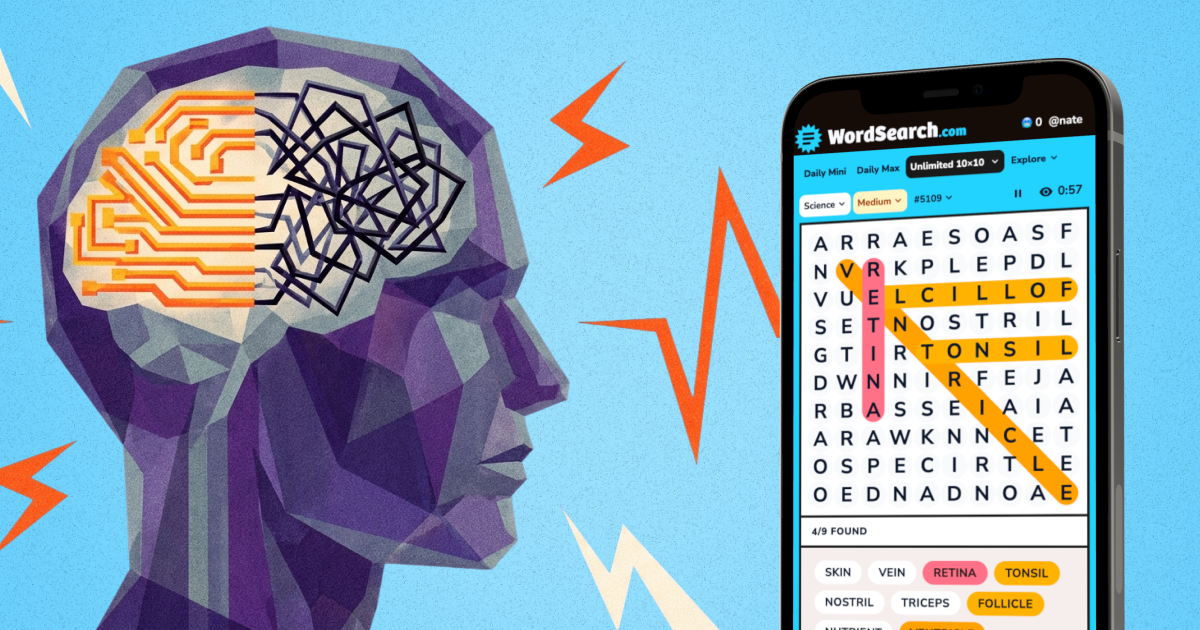
Most of the older generation probably told you that puzzles keep your mind sharp. So is it true, or is it folk wisdom that everyone repeats because it sounds right?
We dug into the research to find out. This article tells you what the studies show and, just as important, what they don't. Though we have to keep it real with you: we run a word search puzzle site, so we have a reason to want the answer to be "yes." That's exactly why we're being careful here. We'd rather give you the honest version than the flattering one, and we'll cite the science so you can check our work.
What the Research Actually Shows
Word Puzzles and Cognitive Performance in Older Adults
The strongest evidence comes from The PROTECT Study, run by the University of Exeter and King's College London — the largest online study of its kind. Researchers asked more than 19,000 adults aged 50 and over how often they did word puzzles, then ran them through cognitive tests measuring attention, reasoning and memory.
The pattern was clear: the more regularly people did the puzzles, the better they performed. The researchers calculated that frequent word-puzzle users had brain function on grammatical reasoning tests equivalent to someone about 10 years younger, and short-term memory accuracy equivalent to about eight years younger. The findings appeared in 2018 and 2019 in the International Journal of Geriatric Psychiatry.
👉 Word-puzzle paper: Brooker et al., "An online investigation of the relationship between the frequency of word puzzle use and cognitive function in a large sample of older adults," International Journal of Geriatric Psychiatry, 2018.
👉 Number-puzzle companion paper: Brooker et al., 2019.
One honest note, which we expand on below: the "10 years younger" framing is a useful way to picture the effect, but it describes a correlation, NOT proof that the puzzles caused the sharper scores.
Vocabulary and Word Recognition 
This is the least flashy benefit and the best supported. A word search is a stack of rapid word-recognition reps. Your eyes scan a grid, lock onto a target string and confirm it letter by letter. Do that a few dozen times and you've practiced spotting and recognizing words at speed.
That's why teachers reach for word searches to reinforce spelling and build vocabulary, and why they show up so often in English-as-a-second-language classrooms. The mechanism here isn't mysterious or oversold. You're getting repeated, low-pressure exposure to words and their letter patterns, which is a normal part of how recognition gets faster.
Focus, Attention and Processing Speed
Finding TANGERINE buried diagonally in a 15-by-15 grid is a visual scanning task. You hold a target in mind, sweep the field and filter out the dozens of distractor letters that aren't what you're looking for. That's selective attention and processing speed doing their job.
In the PROTECT data, attention measures were among the areas where puzzle users stood out most, and verbal reasoning and reaction time were part of the test battery. Word searches lean hard on the scan-and-filter side of that picture, which makes them a clean, repeatable way to practice focused attention.
Stress Relief and the “Flow” Question
Here's the benefit people actually report: it feels good to do one. A word search is a small, finishable task with clear rules and a clear endpoint. You start, you work, you finish — and in a day full of things that never quite resolve, a task with a real ending is, in its own, a small reward.
The clinical research on puzzles-as-stress-relief is thinner than the cognitive-aging research, so we won't overstate it. But the self-report is abundant and consistent: people find puzzles calming, absorbing and a genuine mental break. That tracks with how researchers talk about cognitively engaging leisure in general.
What the Research Doesn’t Show (IMPORTANT)
This is the section most articles skip to sell what they have, but we won't, as it's the one that matters most.
⚠️ Correlation isn't causation. The PROTECT findings are cross-sectional — a snapshot, not a controlled experiment. Sharp people may simply do more puzzles, rather than puzzles making people sharp. Several researchers made this point directly when the study came out: people with better memory and reasoning may just enjoy puzzles more. Even the memorable "X years younger" figures were a way of presenting the data that, as one expert noted, doesn't appear in the paper itself. The association is real; the direction of cause is not settled.
⚠️ Most of the research isn't about word searches specifically. The big cognitive-aging studies center on crosswords, Sudoku and mixed "word and number puzzles" — not word searches on their own. A word search is a simpler task than a crossword, and it's fair to assume it delivers a lighter cognitive workout. When we cite this research, we're extending findings from adjacent puzzle types, and you should read it that way.
⚠️ No puzzle has been shown to prevent dementia. This is the big one. There's no good evidence that any puzzle prevents dementia or Alzheimer's. The brain-training industry got formally called out for implying otherwise. In 2016 the Federal Trade Commission settled with Lumosity for $2 million over deceptive advertising, after the company suggested its games could stave off memory loss, dementia and even Alzheimer's. The FTC's verdict was blunt: the company didn't have the science to back up its ads.
What the evidence does support is gentler. Cognitively stimulating leisure is associated with lower dementia risk across large, long-running studies, likely by building "cognitive reserve" — a buffer that helps the brain tolerate aging. A 2016 systematic review and meta-analysis in the American Journal of Geriatric Psychiatry found that engagement in cognitive leisure activities was linked to reduced risk of cognitive impairment and dementia. That's an association, not a vaccine.
Benefits by Audience
Seniors
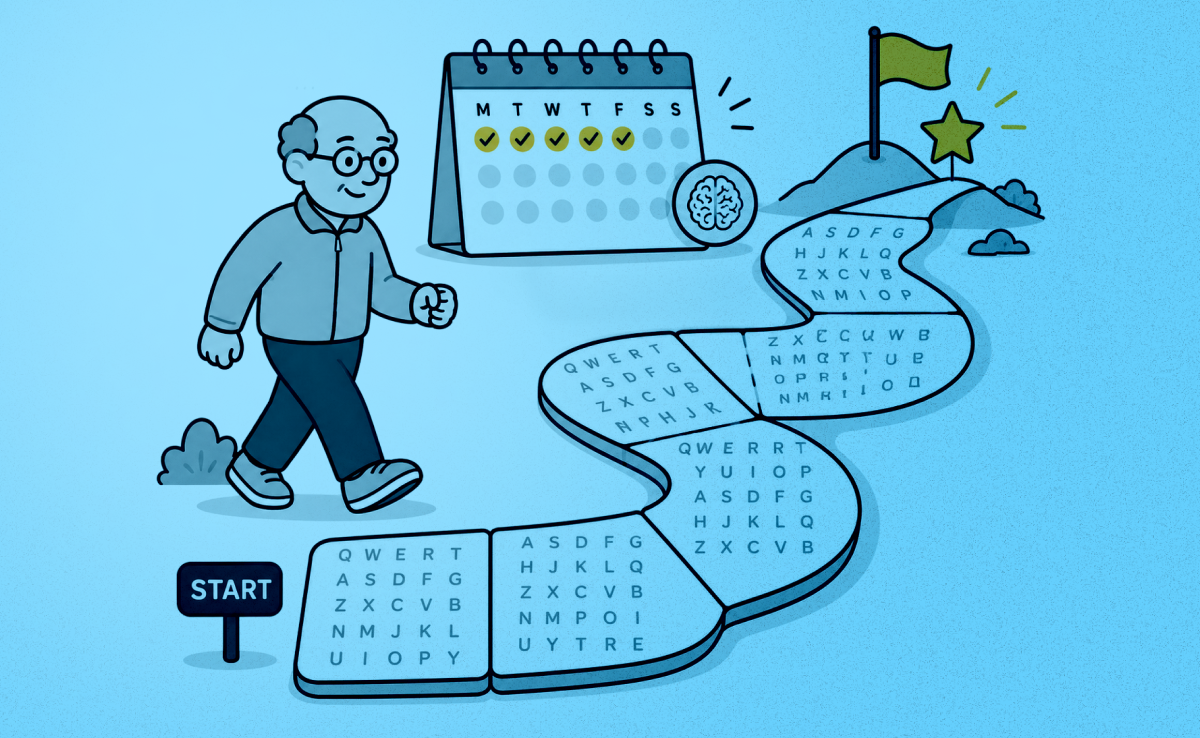
For older adults, the appeal is engagement plus routine plus accessibility. The PROTECT evidence centers on this age group, and a daily puzzle is a low-barrier way to stay cognitively active. Accessibility matters here in a literal sense: large-print word searches make the puzzles usable for people whose eyesight isn't what it was, and printable versions work for anyone who'd rather hold paper than a screen. If a puzzle is hard to read, it isn't relaxing — so the format is part of the benefit.
Kids and Students
For kids and students, word searches reinforce spelling, vocabulary and familiarity with letter patterns. They're a light, low-stress on-ramp to word work — useful, though not a substitute for reading and writing. Easy word searches are a good starting difficulty for younger solvers.
Adults
For working adults, the honest pitch is the coffee-break reset: a few minutes of screen time that isn't doomscrolling. It's a small, structured pause that gives your attention something contained to do. Try the daily puzzle when you need to step away from the inbox without falling into a feed.
How To Get the Most Cognitive Benefit From Word Searches
A few practical, honest pointers.
✅ Variety and difficulty matter more than repetition. An easy puzzle you can finish on autopilot is leisure, not exercise. That's completely fine — but know which one you're doing. If you want the cognitive workout, the task has to push you a little.
✅ Ramp up the challenge. Move to larger grids and harder word searches as the easy ones stop feeling like work. A bit of difficulty is what keeps attention and processing speed actually engaged.
✅ Consistency beats intensity. The research associates a regular habit, not occasional marathons, with better performance. A few minutes most days does more than an hour once a month. This is where a daily streak helps — not as a gimmick, but as scaffolding for the routine the evidence actually points to.
Frequently Asked Questions
Are word searches good for your brain?
Yes, with honest limits. Large studies link regular word-puzzle use to better attention, reasoning and memory in older adults, and word searches in particular give you steady vocabulary and visual-attention practice. What they won't do is prevent disease. The benefit is engagement and mental exercise, not a cure.
Do word searches help prevent dementia or Alzheimer's?
No. No evidence shows that word searches or any puzzle prevent dementia or Alzheimer's. What the research supports is an association: people who stay cognitively engaged tend to have lower dementia risk and better cognitive performance, likely through cognitive reserve. That's a correlation worth taking seriously, but it isn't prevention, and anyone promising prevention is overselling.
Are word searches better than crosswords for your brain?
Not better — different, and crosswords have more research behind them. Crosswords pull in recall, general knowledge and wordplay, while word searches focus on visual scanning and word recognition. A 2022 randomized trial in NEJM Evidence even found computerized crosswords outperformed computerized brain-training games for people with mild cognitive impairment. If you want the heavier verbal workout, crosswords win. If you want a calmer, more accessible task, word searches are the easier daily habit.
What age should kids start word searches?
Most kids can start simple word searches around ages 5 to 7, once they recognize letters and can scan for short words. Begin with small grids and short, familiar words, then build up. Treat it as a fun supplement to reading and spelling, not a replacement for them.
How often should you do word searches?
If you're after the cognitive benefit, a few minutes most days beats an occasional long session. The research links a regular habit, not intensity, to better performance. A daily puzzle is an easy way to keep it consistent. Start today's here!
Are word searches good for seniors?
Yes. They're a low-barrier way for older adults to stay cognitively engaged, and the PROTECT evidence centers on the 50-and-over group. Large-print versions keep them comfortable for aging eyes, which makes the habit easier to actually keep.
Word Searches Are Good for Your Brain — but Not a Cure
These are the facts. They really are good for your mind, but they don't cause miracles — engagement is exactly what a daily word search gives you. Start today! The puzzle's right here.
 Mini Crossword
 Midi Crossword
 Diffle
 Killer Sudoku
 Numberle